
Blowing Up Everything I Knew About Wealth ~Loree Lash-Valencia, via April Uchitel
Loree and I connected back in 2013 over Return on Relationship and the real impact it has on sales and marketing. More than a decade later, that connection has only grown... proof that relationships, when nurtured, compound over time. Glad to share this post... timely and incredibly relevant for so many. (Thanks to April for posting.) /Ted
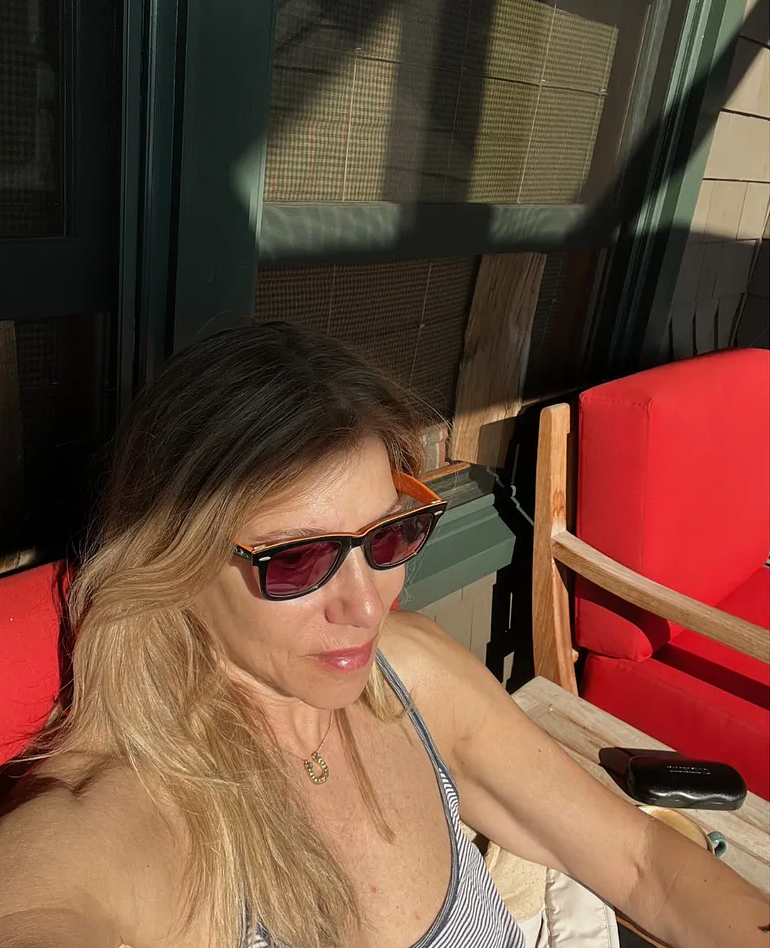
I met Loree Lash-Valencia in late 2024 and immediately felt like I’d found my long-lost blonde twin. Thick black frames. Strong red lip. And a career spent bridging consumer tech with fashion and retail — which, as we both know, is not an easy dance.
Since joining the community, Loree is always the first to raise her hand — brimming with ideas, generosity, and real enthusiasm. As we continue evolving how we work and lead, it’s been a pleasure watching her lean into new opportunities and bring others along with her. Her words are proof that when you claim your story, you transform it into fuel. A powerful reminder for us all.
April 💋
There’s a particular kind of disorientation that comes when an institution decides you are no longer needed—especially after you’ve done everything right.
I used to believe that success protected you. That if you worked hard, delivered results, and led well, you earned a kind of professional safety. Being discarded—quietly and decisively—forced me to confront how conditional that belief really was.
The rupture wasn’t just professional. It was personal.
Because when a system says “not you anymore,” it doesn’t simply end a role. It calls your value into question—suddenly, and without your consent.
“You’re not just grieving the loss. You’re trying to remember who you were before someone else decided the ending.”
For women operating at senior levels, this moment is especially destabilizing. You’ve been conditioned to believe that performance equals protection—that if you keep delivering, the ground beneath you will hold. When it doesn’t, the question isn’t just what’s next—it’s what was real?
Was the value intrinsic, or was it conditional—and how long had I been confusing one for the other?
That moment stayed with me longer than the logistics of what came next. And for a while, it did shake my confidence. Anyone who’s honest will tell you it does. The real work wasn’t proving my capability again—it was rebuilding belief in my own worth, independent of being chosen.
Being discarded by an institution has always reminded me of a relationship ending before you’re ready to leave it. Not because it was right or wrong—but because the choice wasn’t yours. And suddenly, you’re not just grieving the loss. You’re trying to remember who you were before someone else decided the ending.
For a time, I tried to rebuild by recreating what I’d lost. New work. New structures. New versions of the same definitions of success. But underneath that momentum was a deeper question I hadn’t yet answered:
How do you believe in your own value after being discarded?
That question became the real work.
The question wasn’t how to rise or reclaim something I’d lost. It was how to stop outsourcing belief—and start building a life that reflected what I already knew to be true about my value, without needing external validation to keep believing it.
“For a long time, I equated wealth with stability: a single role, a single paycheck, a single source of validation.”
What emerged wasn’t a sense of victory so much as a reorientation. A slow rebuilding of agency. A decision to create safety that didn’t depend on being chosen again. To anchor worth internally rather than continuing to outsource it to institutions, titles, or permission.
This is where my definition of wealth began to change.
“Peace of mind came later.
What came first was more essential…”
For a long time, I equated wealth with stability: a single role, a single paycheck, a single source of validation. It looked solid on paper, but it was fragile by design. One decision—often made far from you—could undo everything.
What I see now is how narrow that definition really was.
Wealth, to me, is no longer accumulation or status—but restored belief. Confidence. Respect. The quiet, unshakeable knowing that my value wasn’t conferred by a role and couldn’t be revoked by its loss.
Peace of mind came later. What came first was more essential: trusting myself again—with confident clarity.
I became more deliberate about what I said yes to—and unapologetic about what I declined. I stopped organizing my choices around endurance or expectation and began building through channels that were authentic to me—additive rather than draining, aligned with my strengths, and capable of sustaining both my ambition and my life.
That shift changed everything. Decisions felt cleaner. More grounded. Less reactive. I wasn’t chasing certainty anymore. I was acting from it.
What I see now is this: the most powerful move I’ve made wasn’t chasing the next role or proving my relevance again.
It was redesigning my life so no single institution could ever define or dismantle my value again.
By building a broader foundation—multiple load-bearing pillars instead of a single point of failure—I didn’t fragment my focus. I strengthened it. Through intentional rebalancing across projects, pathways, and revenue streams, I created a kind of safety no job ever truly offered.
What once felt like security—a title, a paycheck, an employer—was actually concentration risk. And what may look, from the outside, like stepping back has in fact been a decision to go bigger in a more durable way…
Going bigger by distributing risk.
Not sacrificing balance.
Not trading family time for ambition.
Not louder striving.
But ownership.
Agency.
Self-authorship.
The most powerful choice I’ve made is no longer needing to be chosen.
That, to me, is the new wealth.
Originally posted at April Uchitel and Loree Lash-Valencia’s Substack