TRUST ME, YOUR BRAND’S IN TROUBLE ~via Doug Zarkin
I met Doug almost 20 years ago via Brand Innovators. He always brings and important RETURN ON RELATIONSHIP perspective to the table. TRUST so important to any brand... AND even more so, in the current age of initial AI implementation at scale... without giving a thought to the "Trust" implications. /Ted
Let’s talk about the word no one wants to say out loud in a marketing war room: trust. Not ROI. Not funnel velocity. Not first-party data. Trust. Cue the uncomfortable silence. Because while every brand talks about purpose, personalization, and performance—very few actually do the one thing that makes any of that matter: earn trust.
And I get it. Trust doesn’t show up on a dashboard. It’s not built with a promo code. It can’t be optimized in a quarterly media plan. But here’s the inconvenient truth: without trust, your brand is playing house, not building a home. Trust Isn’t a KPI. It’s a Decision. Trust isn’t earned with a Super Bowl ad or a TikTok stunt. It’s earned in the invisible moments most brands overlook.
Want To Know What Builds Trust?
A restaurant seating a family of four at a table for six because they noticed the stroller. A support rep asking, “Is everyone okay?” before addressing the product failure. A brand remembering I bought the earrings for my wife—not sending me an email saying “Hope you’re enjoying them!” (Spoiler: I’m not. They clash with my sneakers.) These aren’t big ideas. But they’re big signals.
Brands that win at trust obsess over moments, not media. They don’t just collect data—they use it to make people feel seen. When I led the transformation at Pearle Vision, trust became our north star. We didn’t build loyalty with discounts or tech upgrades—we built it with intentional humanity. It started with language. We stopped calling them stores and started calling them Neighborhood Eyecare Centers. We called people patients, not customers. And we didn’t have staff—we had eyecare experts. These weren’t marketing stunts. They were trust cues.
And they worked. Because our team backed them up.
Doctors opened exams by asking about patients’ lives—not just their eyesight. They explained what they were doing, listened carefully, and made the experience personal. Those small shifts created big impact. Our research showed patients trusted us more based on the conversation in the chair than on the advanced diagnostics behind it.
Over time, that trust translated into results: #1 in quality of care on Google/ Five consecutive Women’s Choice Awards. Year-over-year business performance that outpaced competitors. We weren’t louder than other brands. We were simply more human. And in healthcare—and in brand building—that matters more than you think.
Automation Without Humanity Is Just Laziness.
Here’s the part no one likes to admit: most of the “personalization” in marketing is just a glorified mail merge. We have all this first-party data. But too many brands use it to target, not connect. Want to see personalization done right? There’s a tiny kids’ store in my neighborhood. Every quarter, they call—not email—my wife and say: “Hey, those shorts your son liked are back in stock. Want us to hold a few?”
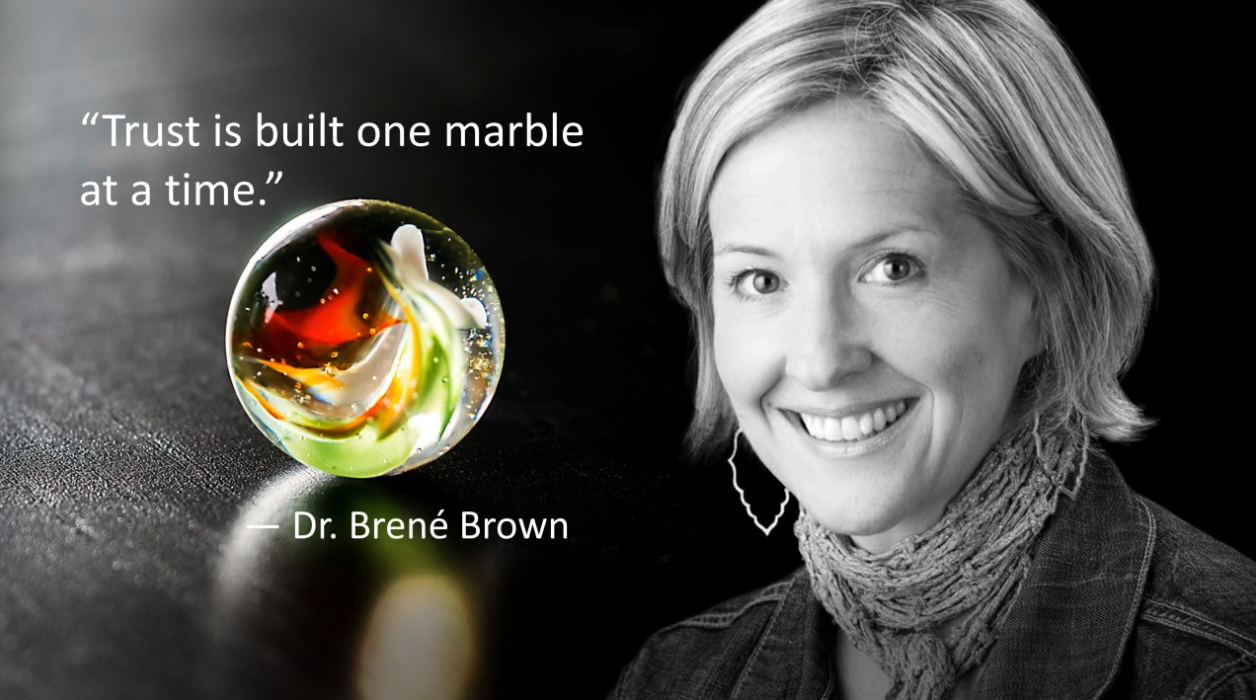
It’s a sales call. But it’s also a marble in the trust jar. Marble what now? Brené Brown says trust is like a marble jar. You fill it one small act at a time. Remembering a birthday. Asking how the surgery went. Following up when you didn’t have to. One marble at a time.
Now for the tough love. If your customers only engage when you’re on sale, don’t talk about you unless you screw up and can’t tell you apart from three of your competitors… You’re not in the Love Zone. You’re not even in the Like Zone. You’re stuck in the Friend Zone. And in the Friend Zone, you’re forgettable. You’re fine. You’re… whatever. You’re not worth the detour. You’re not their go-to. You’re their “I guess.” That’s not a brand. That’s a placeholder.
So, What the Hell Do You Do About It?
Here’s some plays to consider running if you want out:
Audit the trust moments. Where are you earning it? Where are you burning it?
Lose the gimmicks. Trust isn’t a flash sale. It’s a follow-through.
Human beats hype. Every time. A smile at the door will outperform your SEM spend. Bet on it.
Fix the unsexy stuff. The hold music. The checkout flow. The email copy. Trust lives in the details.
Final Thought: Trust Is Your Brand’s Only Real KPI
Anyone can copy your logo. Your product. Your features. Your claims. But trust? That’s un-stealable. If your customers believe in you—not because of what you sell, but because of how you make them feel—you win. Here’s the kicker: they’ll do your marketing for you. So go ahead. Raise your prices. Launch the new service. Expand to that new market. If you’ve built trust? They’ll follow. Just remember: in a world where every brand is shouting, the ones that listen will always be the ones we trust.
And the ones we trust?
They’re the ones we love.